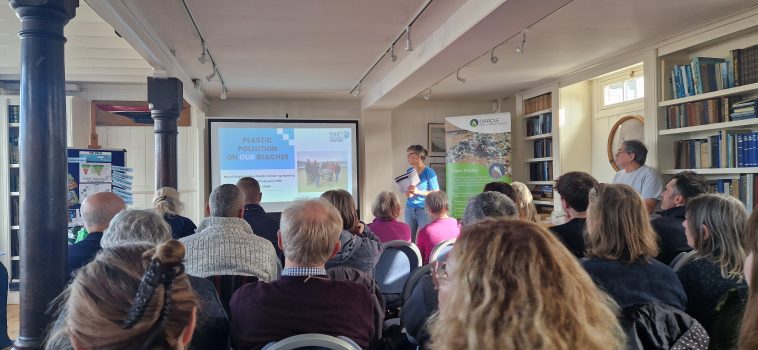
We were delighted to be invited by Planet Aware to their recent forum on plastic pollution along our beaches. It was heartening to see such strong attendance from environmental organisations, alongside representatives from island parish and town councils, all united by a shared commitment to protecting our coastline.
Planet Aware and Litter Free Dorset shone a spotlight on one of the most persistent and underestimated forms of litter: cigarette butts. Far from being harmless, cigarette filters are made from cellulose acetate, a form of plastic that can take between 10 and 15 years to break down in the marine environment. Even then, they fragment into microplastics rather than fully biodegrading. Each discarded butt can leach a cocktail of toxic substances, including nicotine, arsenic, lead and cadmium, as well as polycyclic aromatic hydrocarbons. Studies have shown that just one cigarette butt soaked in water can release enough toxins to be lethal to small aquatic organisms. The scale of the issue is staggering, with billions of cigarette butts entering the environment globally every year. Education and positive behaviour change are therefore critical, and both organisations are actively driving campaigns that encourage responsible disposal and greater public awareness.
The conference also explored the growing problem of nurdles – tiny pre-production plastic pellets used in the manufacture of everyday plastic products. These lentil-sized pellets are easily spilled during transport and handling, and once in the environment they are extremely difficult to recover. Because they are lightweight and buoyant, they can travel vast distances on ocean currents, accumulating on shorelines and in estuaries. Nurdles readily absorb persistent organic pollutants such as PCBs and DDT from seawater, acting as toxic carriers when ingested by marine wildlife. Theo Vickers, marine biologist and photographer, powerfully illustrated how these pellets are mistaken for food by seabirds, fish and invertebrates, contributing to internal injury, starvation and the transfer of harmful chemicals through the food chain.
Oracle Environmental Experts provided valuable insight into the complexities of spill response and clean-up operations. Given their small size and widespread dispersal, nurdles are notoriously challenging to contain once released, often requiring painstaking manual collection and long-term monitoring of affected areas.
We were also encouraged by contributions from students at the Universities of Portsmouth, Southampton and Plymouth, who are undertaking important research into microplastics, toxicology and mitigation strategies. Their work underlines the vital role of science in informing policy and practical action.
It was an informative and inspiring event. We look forward to strengthening our collaboration with these organisations and continuing the collective effort to reduce pollution, protect marine life and ensure our beaches remain clean, healthy and welcoming for everyone.